Malaga Roman Theatre and the Alcazaba
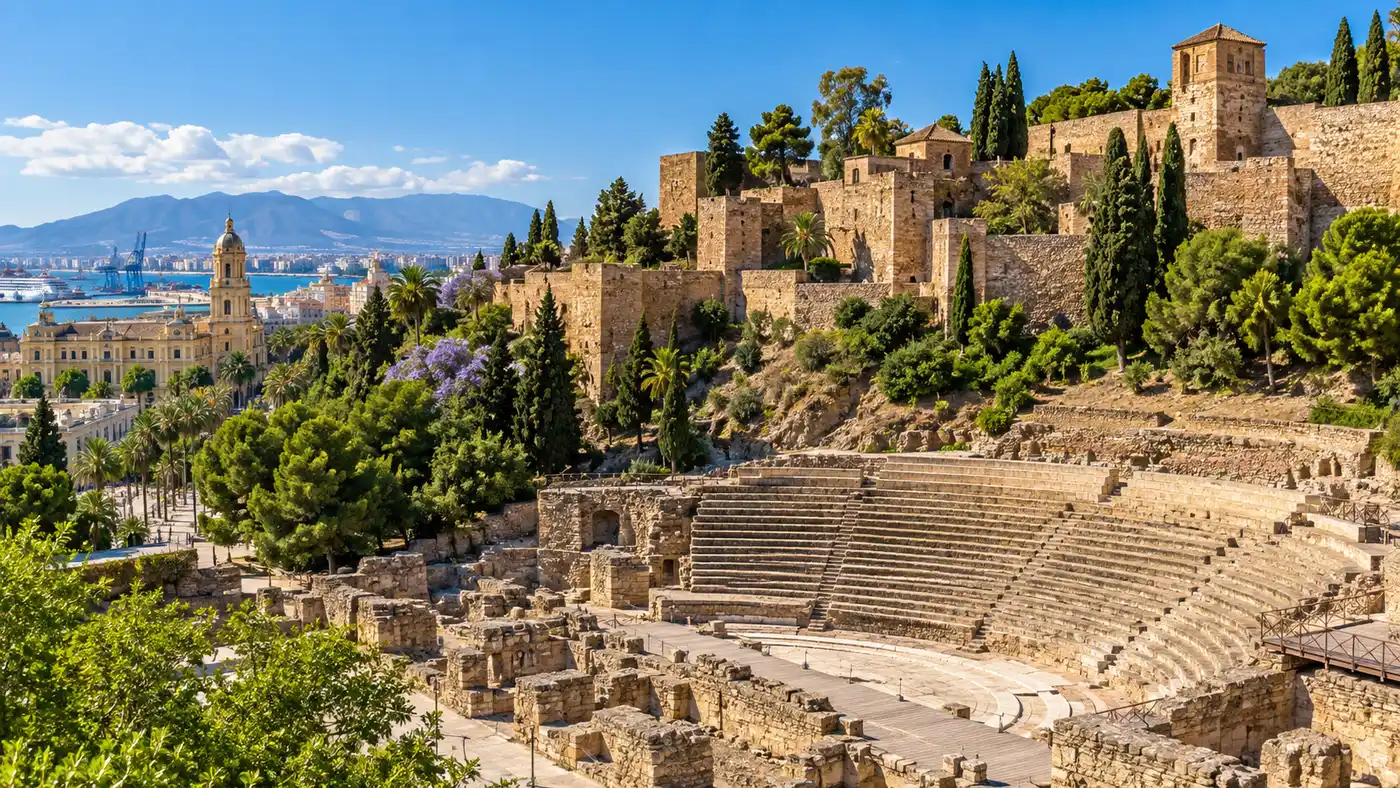
You can stand on Calle Alcazabilla with a cold drink and look at two entirely different civilizations pressed against the exact same hillside. It feels unreal. Right at street level sits the ruined semicircle of Roman seating, weathered white and grey in the Andalusian sun, while just fifty feet higher rise the massive ochre battlements of an 11th-century Islamic palace fortress. Exploring the roman theatre alcazaba malaga complex gives you an instant, tangible sense of how Mediterranean empires simply built over each other without bothering to wipe the slate clean.
Most European cities bury their ancient past beneath centuries of concrete and subway tunnels. Malaga did that too for a while, almost by accident, until an ill-advised gardening project in 1951 brought Roman stones back to the daylight. Today, the pairing of the Roman theatre and the Moorish fortress creates the most dramatic architectural panorama in the city. Visiting them together takes a bit of strategy if you want to avoid burning out under the midday heat, but seeing where classical Rome collides with the golden age of Al-Andalus is worth every minute of climbing.
Book your alcazaba malaga experience:
How the Roman Theatre and the Alcazaba Became Entangled
The relationship between these two monuments is not just a matter of visual proximity. They are physically built from the same rock. The theatre dates to the reign of Emperor Augustus in the 1st century AD, when the city was known as Malaca and made a fortunes exporting pungent fermented fish sauce across the western empire. For about two centuries, citizens filled those stone benches to watch pantomimes, comedies, and civic speeches. By the 3rd century, Roman power was splintering, tastes changed, and locals converted parts of the orchestra into large vats for processing that very fish sauce before abandoning the structure entirely.
Centuries slipped by. When the Hammudid dynasty began erecting the fortress on Mount Gibralfaro in the 1000s, they looked down at the overgrown marble and limestone ruins and saw a free quarry. The Moorish stonemasons dragged carved Roman capitals, fluted column shafts, and massive limestone lintels up the slope to build their own ramparts. If you know where to look while reading up on the history and architecture of the Alcazaba, you will spot Roman inscriptions set sideways into Moorish archways and classical marble columns supporting Islamic horseshoe gates like the Puerta de las Columnas.
Note: The site lay buried beneath modern streets until 1951, when workers grading ground for the garden of a new cultural centre struck ancient masonry. Malaga spent the next four decades debating what to do before finally demolishing the cultural building in the mid-1990s to uncover the full semicircle.
Many visitors mistake the stone bowl for a malaga amphitheatre, but the distinction matters. Amphitheatres were full circles built for gladiators and beast hunts, while this is an open-air theatre designed for drama and acoustics. The curved hillside served as a natural booster for human speech, carrying whispers from the flat stage straight up into the highest tier of seats. Even now, standing on the modern wooden viewing platform, you can appreciate how well the Roman engineers understood the topography of Mount Gibralfaro.
Visiting the Teatro Romano Alcazaba Malaga: What to Expect at the Base
Visiting the theatre itself is straightforward because the city does not charge a cent to see it. You enter through a small, modern glass box of an interpretation centre right on the pedestrian boulevard. Inside, there are several display cases containing Roman coins, olive oil lamps, delicate terracotta pottery shards, and panels explaining how the city functioned during the classical era. It takes maybe fifteen minutes to walk through before you push open the rear doors and step directly onto the wooden walkways bordering the ruins.
Walking along the edge of the cavea - the tiered seating bowl - gives you a genuine sense of scale. The theatre originally measured roughly 31 metres across and stood 16 metres high. About thirteen tiers of seating remain intact today, along with the semicircular orchestra where the municipal elite sat in portable chairs. Behind the stage area, you can see remnants of the scaenae frons, the once-elaborate backdrop wall that would have stood several stories tall, decorated with imported marble statues of deities and emperors.
Pro tip: Walk up the stepped ramp beside the theatre along Calle Alcazabilla just past dusk. The amber floodlights kick on around 9:15 pm in summer, casting the shadows of the Roman columns against the massive red clay walls above without costing you a single euro.
What makes the teatro romano alcazaba malaga setting so memorable is the sheer physical contrast. You lean against a Roman balustrade, look past a row of ancient column stumps, and your gaze immediately runs up against the Tower of Homage rising sheer out of the stone face. The juxtaposition is jarring and beautiful. Some days, local theater groups set up modern staging on the ancient stone floor for summer festivals, reviving the acoustic function the site held two thousand years ago.
- The Interpretation Centre: a quick, air-conditioned stop with models of Roman Malaca and recovered artifacts.
- The Cavea: the surviving thirteen stone tiers where common citizens sat according to their social rank.
- The Orchestra: the flat semicircular space at the bottom, paved with limestone slabs where city magistrates watched performances.
- The Vomitoria: vaulted arched passages cut into the stone that allowed hundreds of spectators to exit in minutes.
Moving from the Roman Steps up into the Alcazaba
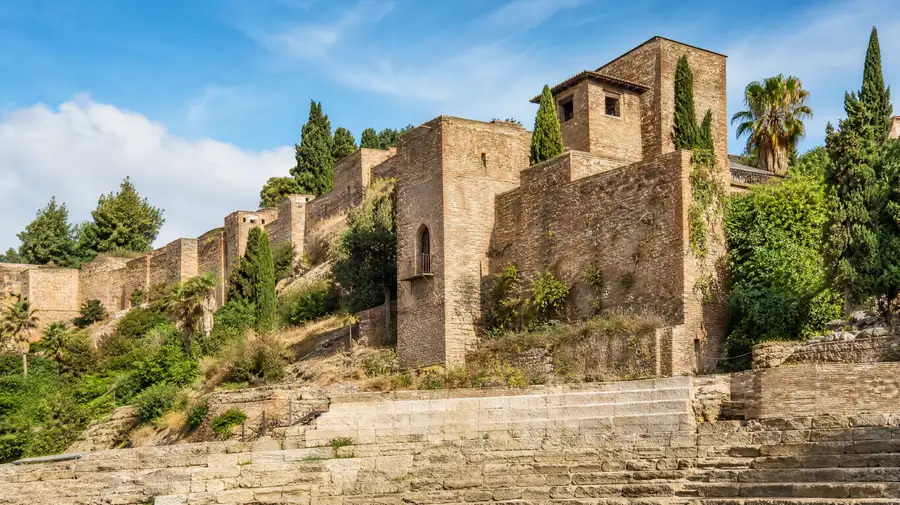
Once you finish inspecting the Roman ruins, the entrance to the Moorish fortress sits just about fifty paces to your left. You step away from the open, sun-bleached limestone and walk straight into a shaded switchback ramp flanked by prickly pears, bougainvillea, and heavy brick fortifications. The mood shifts immediately. The Roman site feels wide open and exposed to the sky, while the fortress feels secretive, defensive, and meticulously enclosed.
As you climb higher, look back down over the outer walls. The Roman theatre spreads out below like an architectural blueprint. From the ramparts of the lower defensive precinct, you get an overhead perspective on the stage foundations and the curved seating that you simply cannot appreciate from street level. This elevation also reveals how the Moors used the steep topography to make the hill impenetrable to Christian armies approaching from the coast.
Passing through the double-elbowed gatehouses - designed to break the charge of battering rams - brings you to the inner palatial sectors. Here, running water replaces the defensive grit. If you wander deeper inside the Alcazaba, you discover tranquil courtyards lined with sour orange trees, marble-edged fountains, carved plaster arches, and quiet residential quarters that mimic the great Alhambra in Granada on an intimate scale. The temperature drops five degrees the moment you enter the gardens, cooled by running rills and constant sea breezes.
I find this transition between the two monuments to be the best part of the morning. You go from imagining the loud, boisterous clamor of a Roman theatrical crowd to experiencing the serene, cloistered luxury of a medieval Muslim governor's private chambers in less than twenty minutes of walking.
Book your alcazaba malaga experience:
Comparing the Alcazaba and Roman Theatre Malaga
Planning your time between both monuments is simple enough, but they run on completely different schedules and pricing structures. While they share the same hillside, they are managed by separate entities. The Roman Theatre operates as an open archaeological park managed by the Andalusian regional government, whereas the fortress is run by the Malaga municipal culture department.
To help balance your morning or afternoon, here is how the two sites stack up side by side:
| Feature | Roman Theatre | Alcazaba Fortress |
|---|---|---|
| Admission Fee | Free entry | €3.50 (or €5.50 combined with Gibralfaro) |
| Average Visit Time | 30 to 45 minutes | 1.5 to 2 hours |
| Primary Era | 1st century AD (Augustan) | 11th to 14th century (Moorish) |
| Terrain & Access | Flat timber ramps, wheelchair accessible | Steep cobbles, stone steps, high ramps |
| Key Highlight | Intact stone seating & interpretation centre | Nasrid courtyards, towers, and sea views |
If your schedule is tight, you can easily digest the theatre in twenty minutes from the perimeter walkway along Calle Alcazabilla without even going inside the gate. The fortress, on the other hand, demands actual physical stamina. You will be walking on slick river stones set into steep slopes, dodging low stone lintels, and climbing narrow parapets without railings. It is not an attraction you want to rush through in half an hour.
Most travelers find it easiest to do the theatre first thing around 10:00 am, spend half an hour absorbing the ancient history, and then head up the fortress ramps before the sun reaches its peak over the Mediterranean.
Practical Tips for Exploring Both Monuments
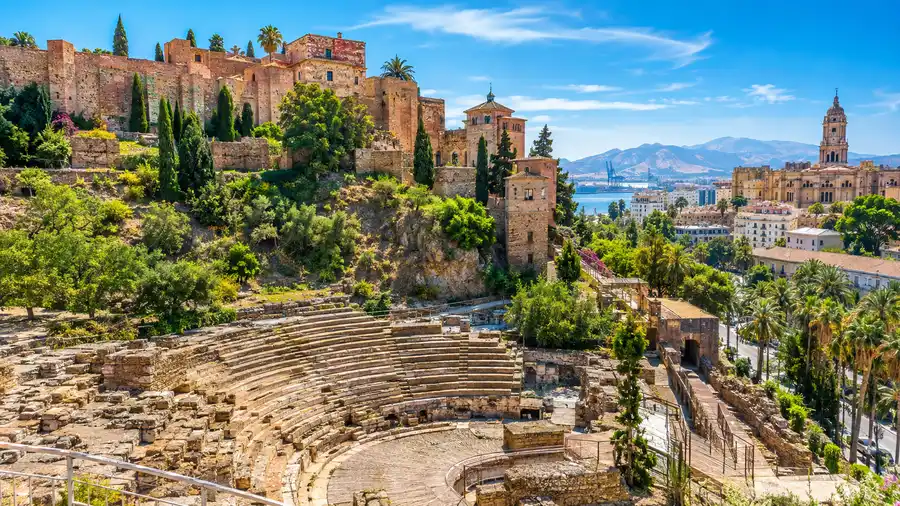
Visiting the alcazaba and roman theatre malaga in one continuous stretch requires some basic preparation, mostly centered around comfort and timing. Mount Gibralfaro is essentially a giant chunk of limestone that absorbs heat all day and radiates it back out at you. Summer afternoons can feel like walking inside a bread oven, especially among the unshaded Roman stones.
Footwear matters more here than almost anywhere else in the historic centre. The Roman site features smooth wooden decking, but the Alcazaba is paved with rounded river pebbles set on end, polished smooth by millions of leather soles over hundreds of years. One patch of loose dust or a stray drizzle turns these paths into an impromptu slide. Leave thin flat sandals and dress shoes in your hotel room.
- Footwear choices: wear rubber-soled sneakers or sturdy walking shoes with real grip to handle the polished fortress stones.
- Timing your route: arrive either at 9:00 am when the fortress opens, or around 5:30 pm when the stone walls cast long shadows across the pathways.
- Ticketing tricks: buy the combined Alcazaba and Gibralfaro ticket from the automated machine by the gate to skip long ticket counter lines.
- Hydration stops: carry a reusable bottle; there are water fountains near the Moorish palace courtyards, but none inside the Roman theatre.
- Sunday afternoons: the Alcazaba offers completely free admission every Sunday after 2:00 pm, though lines can stretch halfway down the street.
If you have mobility challenges, take note. The interpretation centre and theatre viewing platform accommodate wheelchairs and strollers smoothly. The fortress does have a municipal elevator accessed from the rear of the hill on Calle Guillén Sotelo, behind the town hall, which drops you straight into the upper Nasrid palace. This bypasses the steep climb entirely, though you will miss the lower ramparts and the view back down over the Roman ruins.
Frequently Asked Questions about roman theatre alcazaba malaga
Is the Roman Theatre in Malaga completely free to visit?
Yes. There is no admission fee for the interpretation centre or the wooden walkways winding around the ancient stone seating. You simply walk in during opening hours.
Can you walk directly from the Roman Theatre into the Alcazaba?
Not through an internal gate. You exit the Roman Theatre visitor centre onto Calle Alcazabilla, turn right, and walk roughly fifty metres along the pedestrian street to reach the fortress ticket booth and ramp entrance.
Is it an amphitheatre or a theatre?
It is a classical Roman theatre, constructed with a semicircular seating area facing an elevated wooden stage. Amphitheatres were circular or oval arenas built specifically for gladiatorial combat, which this site never hosted.
How much time should I set aside for both sites?
Plan for roughly two and a half hours total. You will spend about thirty to forty minutes wandering the Roman ruins and museum, and roughly ninety minutes exploring the palace, gardens, and walls of the fortress.
Quick Reference
- Location: Calle Alcazabilla, Malaga Historic Centre
- Theatre Cost: Free entry year-round
- Alcazaba Cost: €3.50 regular / €5.50 combined ticket
- Best Lighting: Late afternoon or after sunset
- Total Time Needed: Around 2.5 hours
Book your alcazaba malaga experience:
The Bottom Line
You will see a lot of Moorish castles and Roman remnants scattered across southern Spain, but rarely do you see them sharing the exact same patch of ground. Standing below the curved stone steps of the theatre with the massive clay towers of the fortress looming directly above is one of those travel moments that sticks with you long after you fly home. Once your legs are tired and your phone is full of photos, grab a seat outside at the historic Bodega Bar El Pimpi right across the street, order a small glass of sweet Malaga wine, and watch the evening light slowly turn two thousand years of layered stone into pure amber.
Read more about alcazaba malaga.