Alcazaba Malaga Opening Hours
Complete Alcazaba Malaga opening hours guide. Details on summer and winter times, last admission rules, free Sunday …
Continue Reading →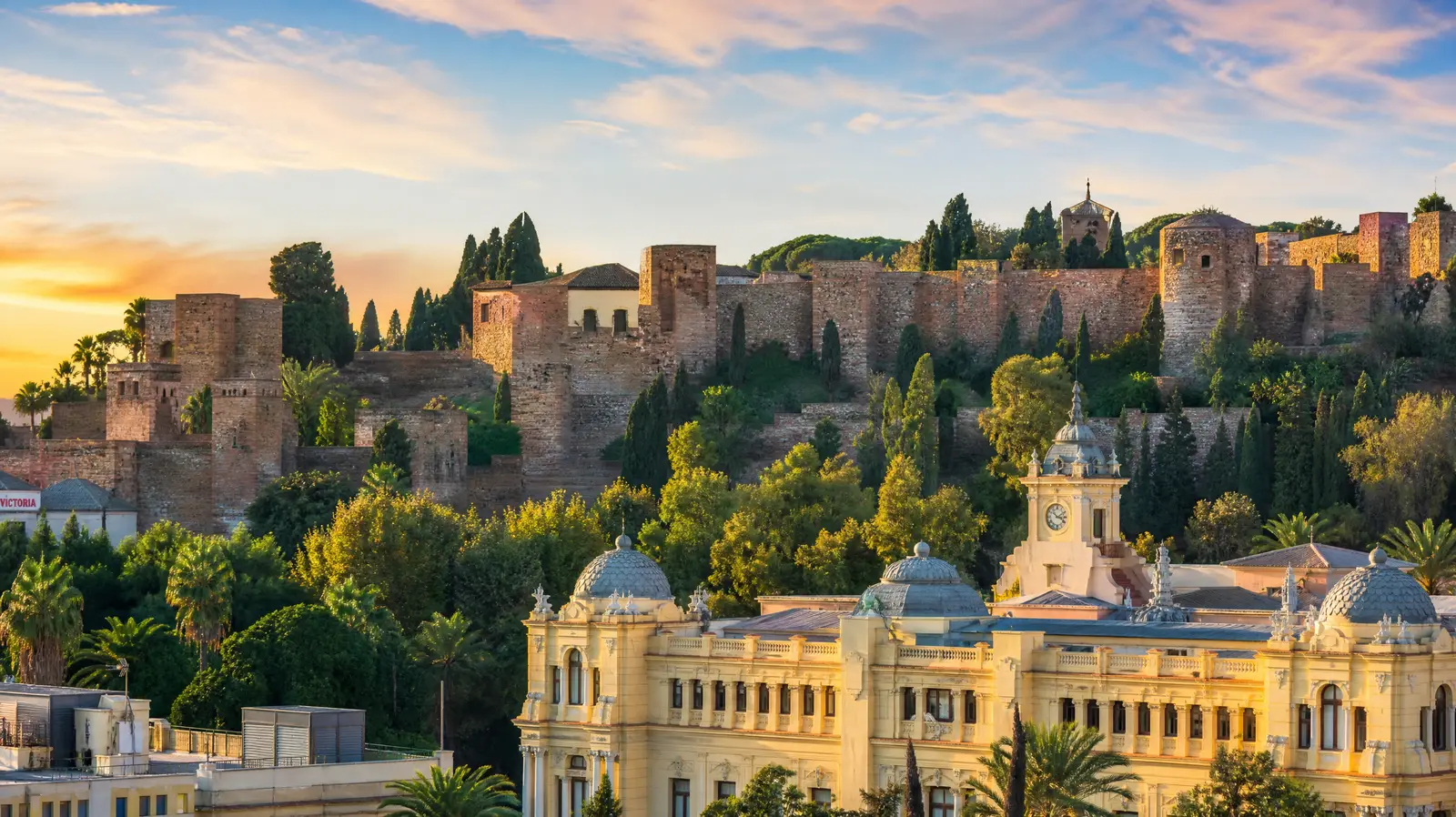
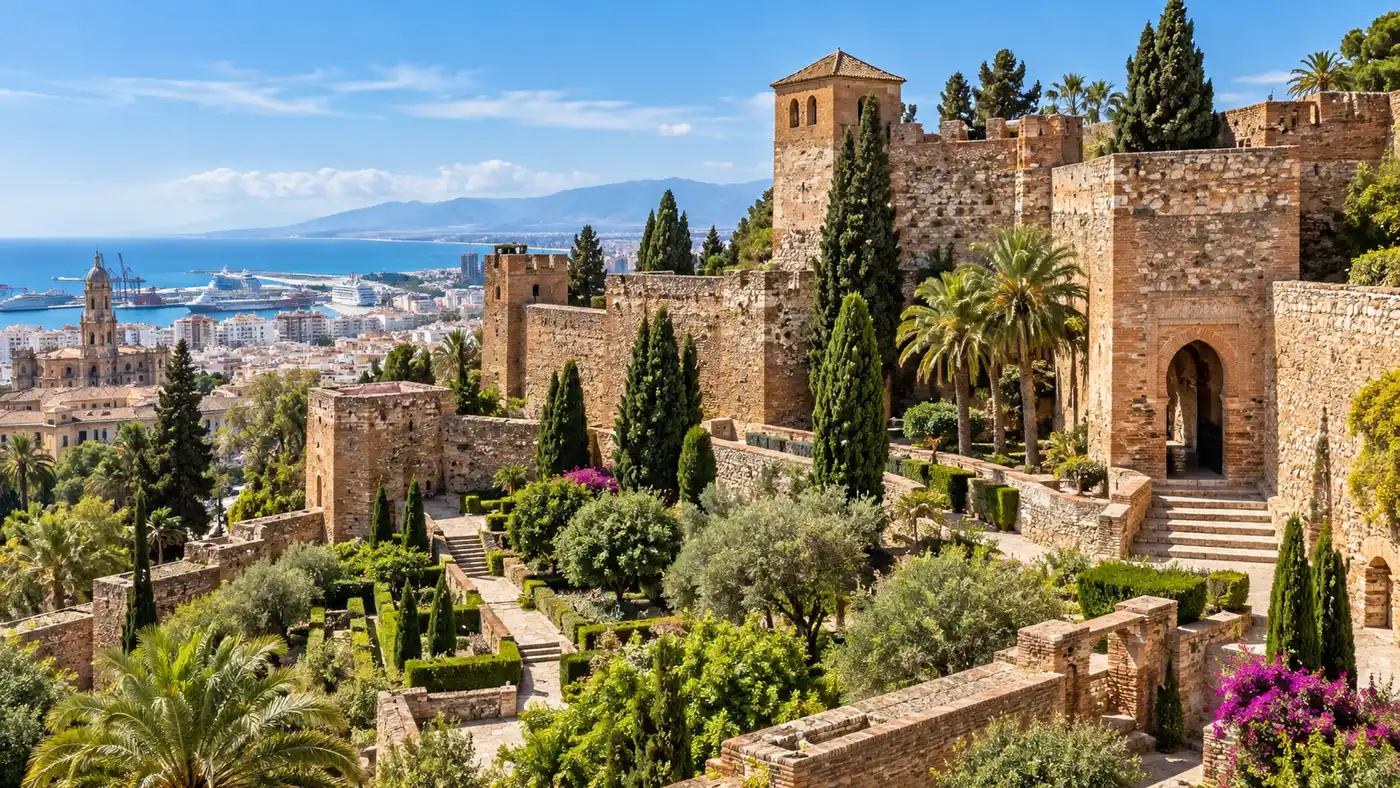
Step into the Alcazaba of Málaga, an eleventh-century Moorish fortress perched above the Mediterranean, filled with trickling fountains, shaded courtyards, and Roman columns.
Discover what makes alcazaba malaga unforgettable.
Unlike the Alhambra, you rarely need to fight for tickets weeks in advance. Admission costs less than a morning coffee in many European capitals, making it one of the most accessible historic landmarks in Andalusia.
Learn more →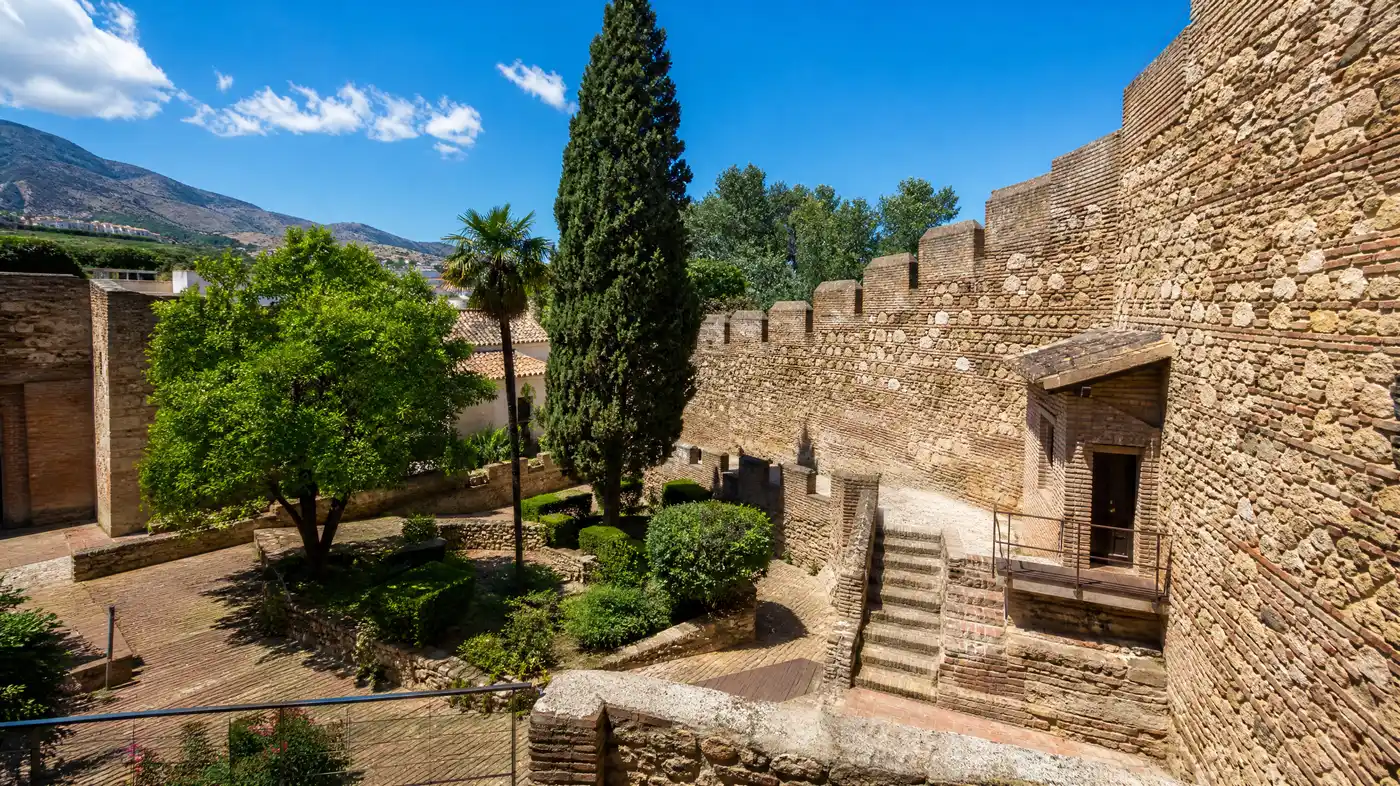
The Puerta de la Bóveda and Puerta de las Columnas force you through sharp right-angle bends built to halt cavalry charges. Exploring these stone chambers shows medieval military engineering at its sharpest.
Learn more →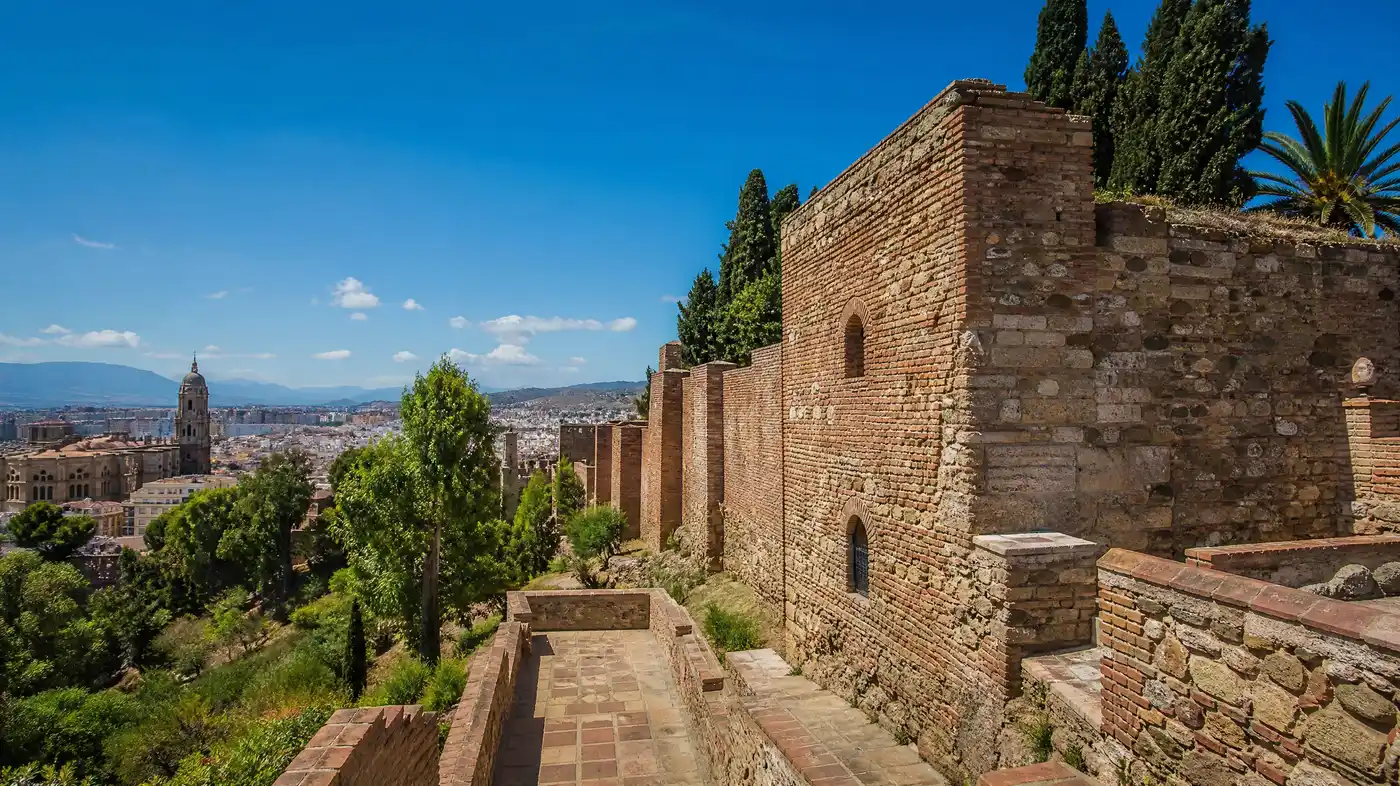
Moorish masons quarried the abandoned Roman theater next door, slotting ancient marble pillars into Islamic horseshoe arches. It creates a visible timeline of Málaga's rulers within a single doorway.
Learn more →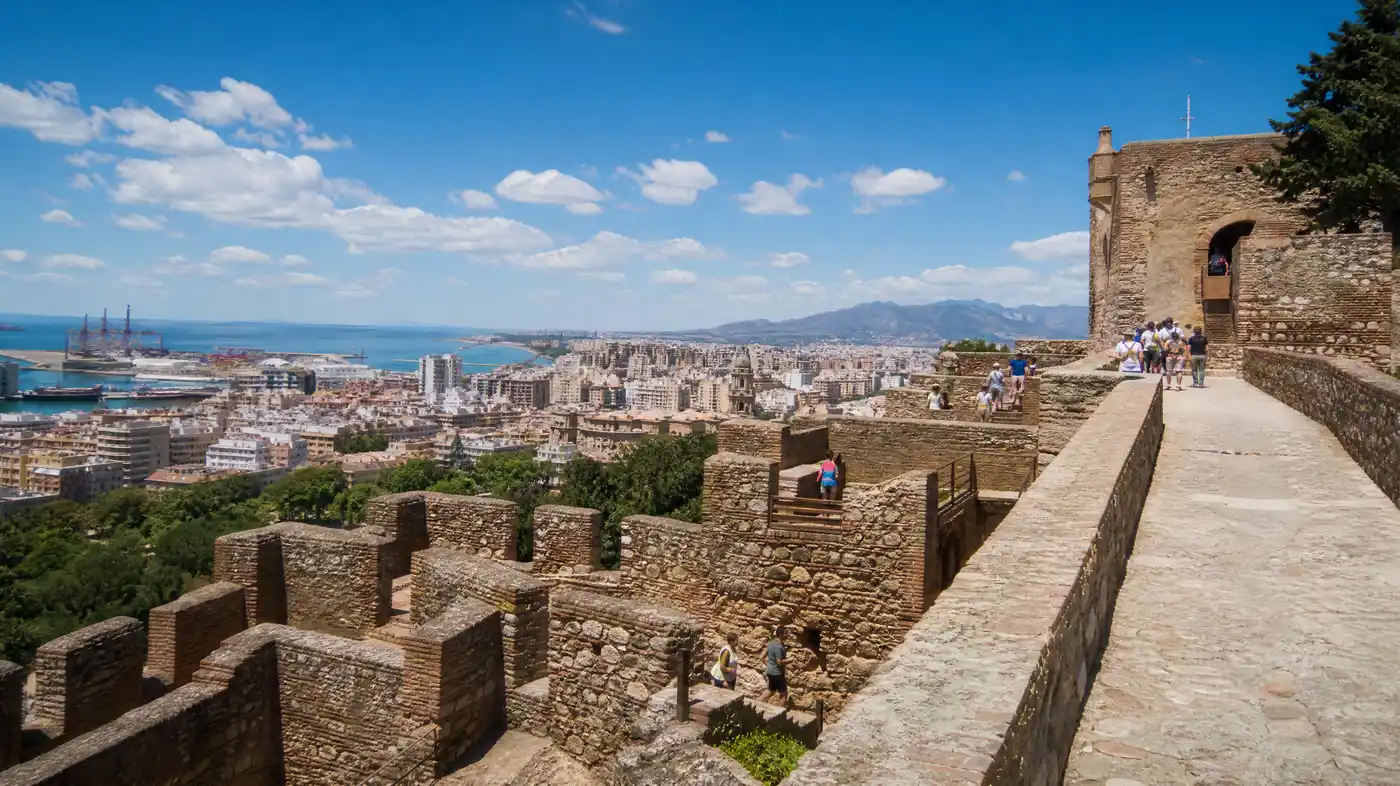
A walled pathway links the lower citadel to the fourteenth-century Gibralfaro castle above. Tackling both gives you a full picture of how medieval Málaga defended its shoreline.
Learn more →What to expect from arrival to departure.
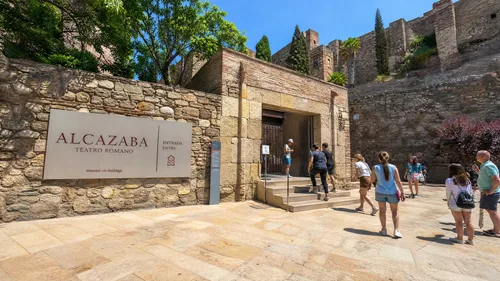
Pick up your ticket at the foot of Calle Alcazabilla, right beside the uncovered glass pyramid and Roman tiers.
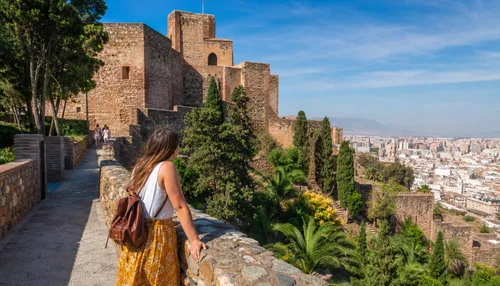
Walk up the gentle cobble-and-brick switchbacks through the Puerta de la Bóveda, where the city traffic fades away.
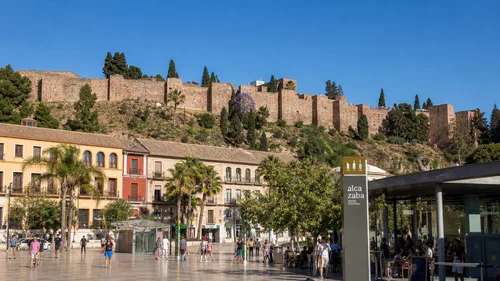
Pause in this open terrace garden filled with bougainvillea, cypress trees, and a stone basin fed by natural springs.
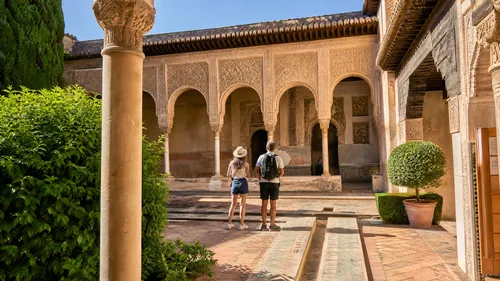
Step into the Cuartos de Granada, admiring the restored plasterwork, wooden ceilings, and courtyard water rills.
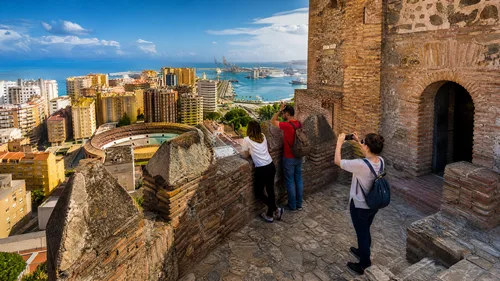
Head out onto the high eastern wall for uninterrupted views of the bullring, cruise port, and Monte Gibralfaro.
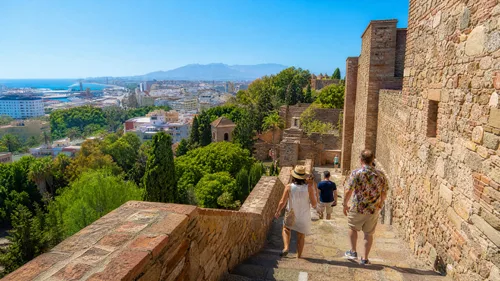
Exit back down the main ramp to Calle Alcazabilla, or take the internal lift directly out to Calle Guillén Sotelo.
Pound for pound, the Alcazaba fortress in Málaga is the best-preserved Moorish citadel complex in Spain. Commissioned by Badis ibn Habus of the Taifa of Granada in the mid-eleventh century, it served as both a military stronghold and a palatial residence. The builders incorporated salvaged Roman capitals and shafts from the amphitheater sitting directly at the hill's base, giving the outer gates a striking layered past.
Walking up through the double concentric walls feels like leaving the modern cruise port behind for a hillside village of stone, jasmine, and running water. The lower levels were built purely for defense, with zig-zag ramps designed to break the momentum of attackers. Higher up, the mood shifts into domestic calm, opening onto the Cuartos de Granada where Moorish governors lived among carved plaster archways and sunken orange tree gardens.
Many travelers mistake it for just another castle in Málaga, but the fortress has an intimacy that larger monuments lack. You can lean against a horseshoe archway on the upper ramparts, look across the rooftops to the cathedral, and hear water gurgling through clay channels laid out nearly a thousand years ago.
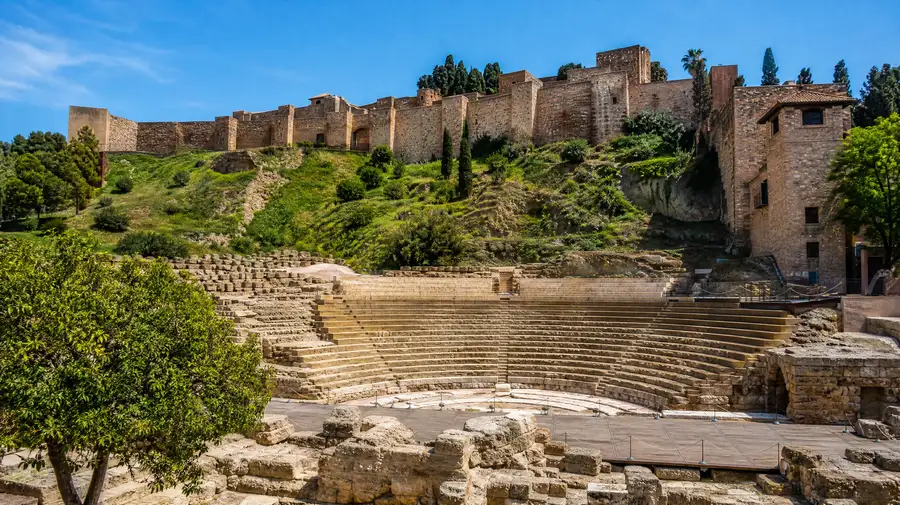
Paid €3.50 at the machine and walked straight in at 9:15 AM. The views over the harbor from the palace gardens were stunning, and the place was practically empty.
Loved seeing Roman columns slotted sideways into Moorish archways. The brick switchbacks make you realize how terrifying attacking this place must have been.
Beautiful fortress and gardens, but be warned about the cobblestones. They get slippery in the morning dew, so skip the sandals and wear decent sneakers.
Much more peaceful than the Alhambra in Granada. The trickling water channels through the palace courtyards created such a calm refuge right in the city center.
Compare options and book directly below.
Full access to the lower fortified perimeter, upper palace quarters, archaeological exhibits, and viewpoints.
Includes entry to both the Alcazaba and the hilltop Castillo de Gibralfaro, saving €1.50 compared to separate tickets.
Complimentary entry for all visitors until closing. Arrive by 1:45 PM to beat the initial queue at the gate.
Everything you need to know before visiting alcazaba malaga.
Hours: Open daily. Summer (April 1 – October 31): 9:00 AM – 8:00 PM (last entry at 7:00 PM). Winter (November 1 – March 31): 9:00 AM – 6:00 PM (last entry at 5:00 PM). Closed January 1, December 24, 25, and 31.
| Alcazaba Standard Entry (On-site kiosk or online) | €3.50 |
| Combined Citadel & Gibralfaro (Valid for 48 hours) | €5.50 |
| Sunday Afternoon Pass (After 2:00 PM Sundays) | Free |
📍 Calle Alcazabilla, 2, 29012 Málaga, Spain
See it before you go.
Worth combining with your alcazaba malaga visit.
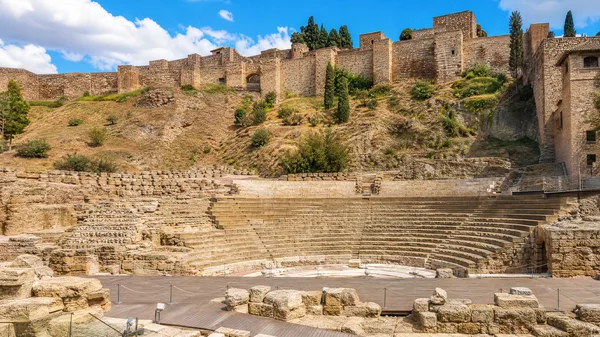
First-century BC amphitheater sitting directly below the fortress walls, free to view from the street or enter through its visitor center.
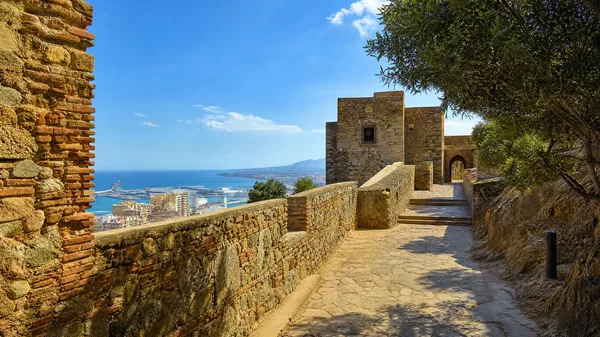
Fourteenth-century fortress guarding the ridge above, offering the most famous lookout over the bay of Málaga.

Lively public square lined with outdoor tapas bars, street performers, and the birthplace museum of Pablo Picasso.
Alcazaba Malaga welcomes all visitors with accessibility features and family-friendly amenities.
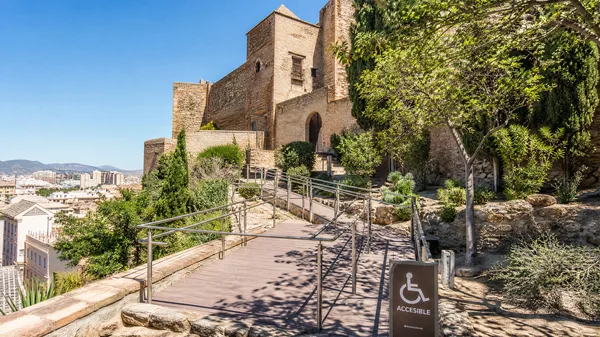
Overall wheelchair access is very limited due to the historic architecture, cobblestone pathways, and steep stairs. However, an elevator located on Calle Guillén Sotelo (behind City Hall) provides step-free access directly to the upper palace area (typically closed on Mondays; availability can vary).
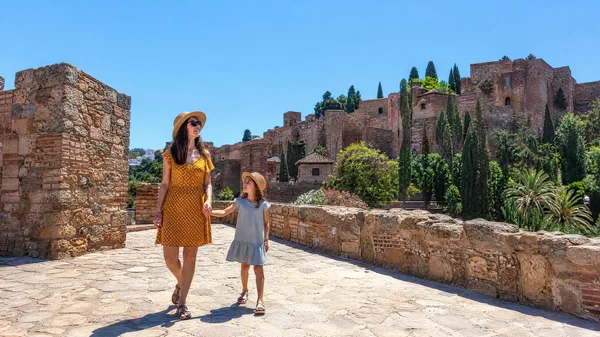
Children under 6 receive free entry, making it family friendly to visit, but bringing baby strollers/pushchairs is strongly discouraged due to numerous stairs, steep gradients, and uneven surfaces. Visitors with babies or toddlers are advised to use a baby carrier or leave strollers at the entrance.
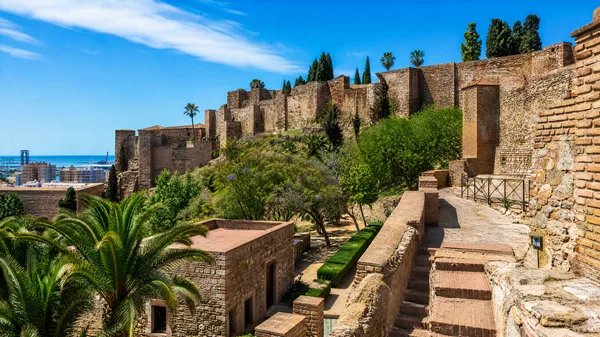
Information placards throughout the citadel are printed in both Spanish and English, supplemented by QR codes for mobile audio tracks.
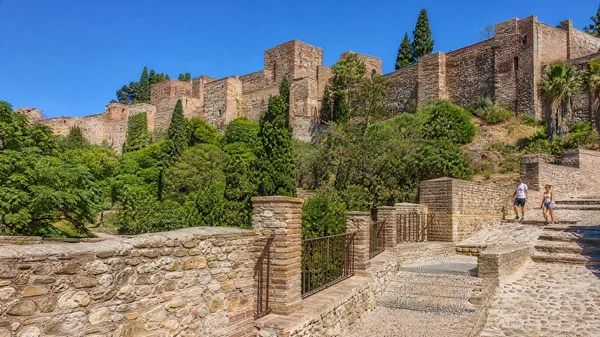
The complex spans multiple terraced defensive levels on a steep hillside. Navigating the fortress requires walking on uneven cobblestones, steep ramps, and numerous stone staircases without handrails in some sections; comfortable, sturdy footwear is essential.
Dive deeper into alcazaba malaga.
Complete Alcazaba Malaga opening hours guide. Details on summer and winter times, last admission rules, free Sunday …
Continue Reading →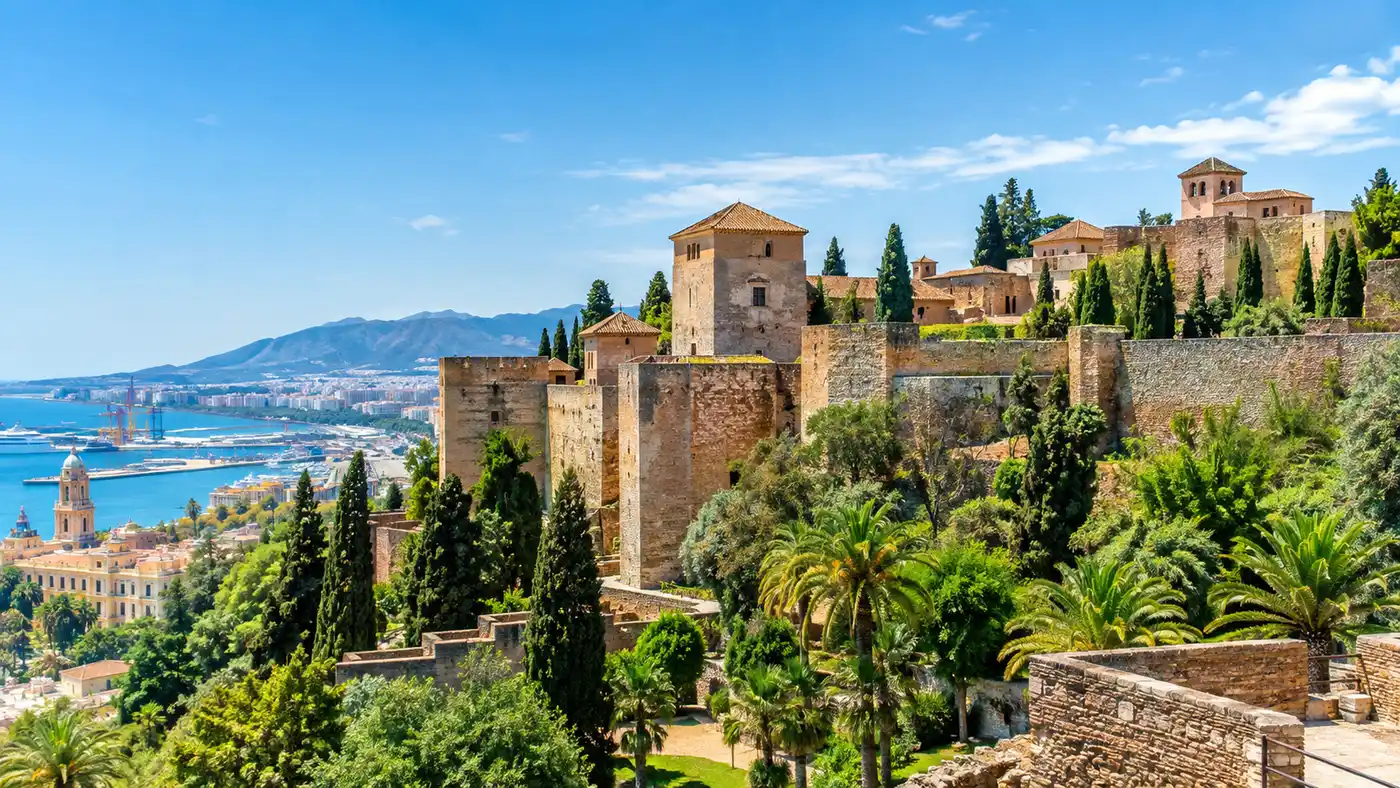
Discover Alcazaba Malaga tickets, updated 2025 prices, joint passes with Gibralfaro Castle, and how to get free entry on …
Continue Reading →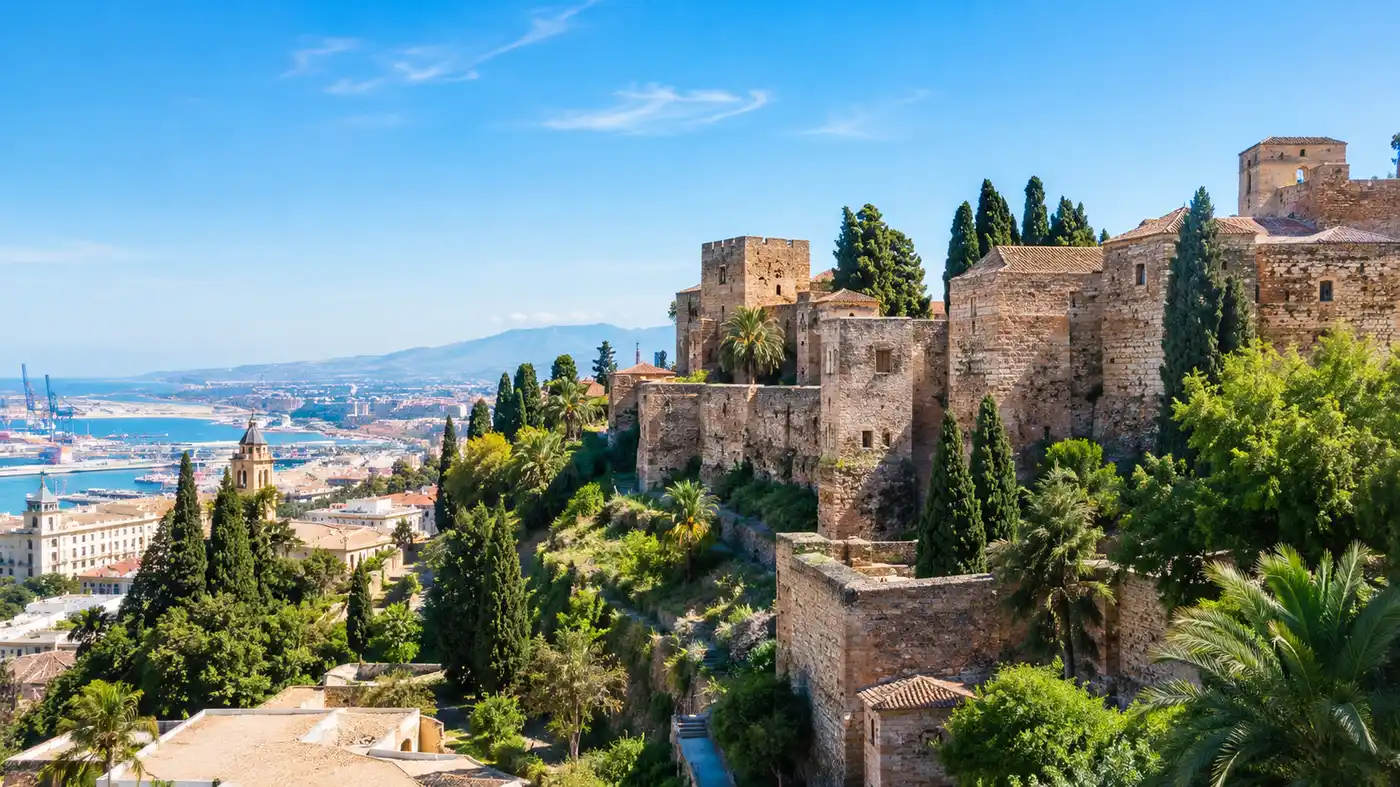
Compare Alcazaba Malaga tour options, audio guide apps, and walking routes. Practical tips on costs, phone prep, and …
Continue Reading →
Plan your trip to Castillo de Gibralfaro in Malaga. Discover practical tips on hiking the ramparts, ticket prices, bus …
Continue Reading →
Uncover the fascinating Alcazaba Malaga history, from Zirid origins and Roman spolia to stunning Nasrid palace …
Continue Reading →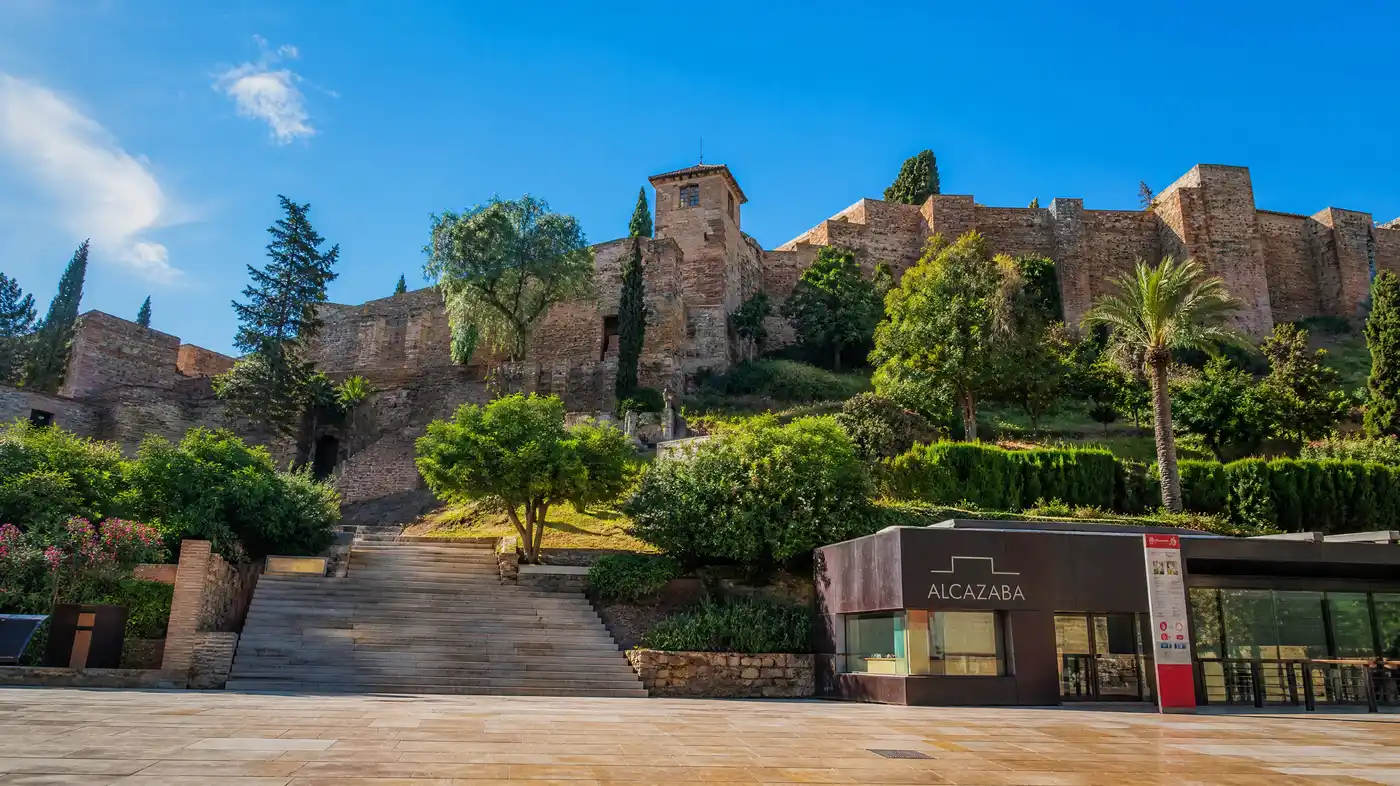
Wondering how to get to Alcazaba Malaga? Read this local guide covering the main entrance, the hidden tunnel lift, …
Continue Reading →
Step inside the Alcazaba Malaga: discover hidden Nasrid palaces, fragrant Moorish gardens, ancient defensive gates, and …
Continue Reading →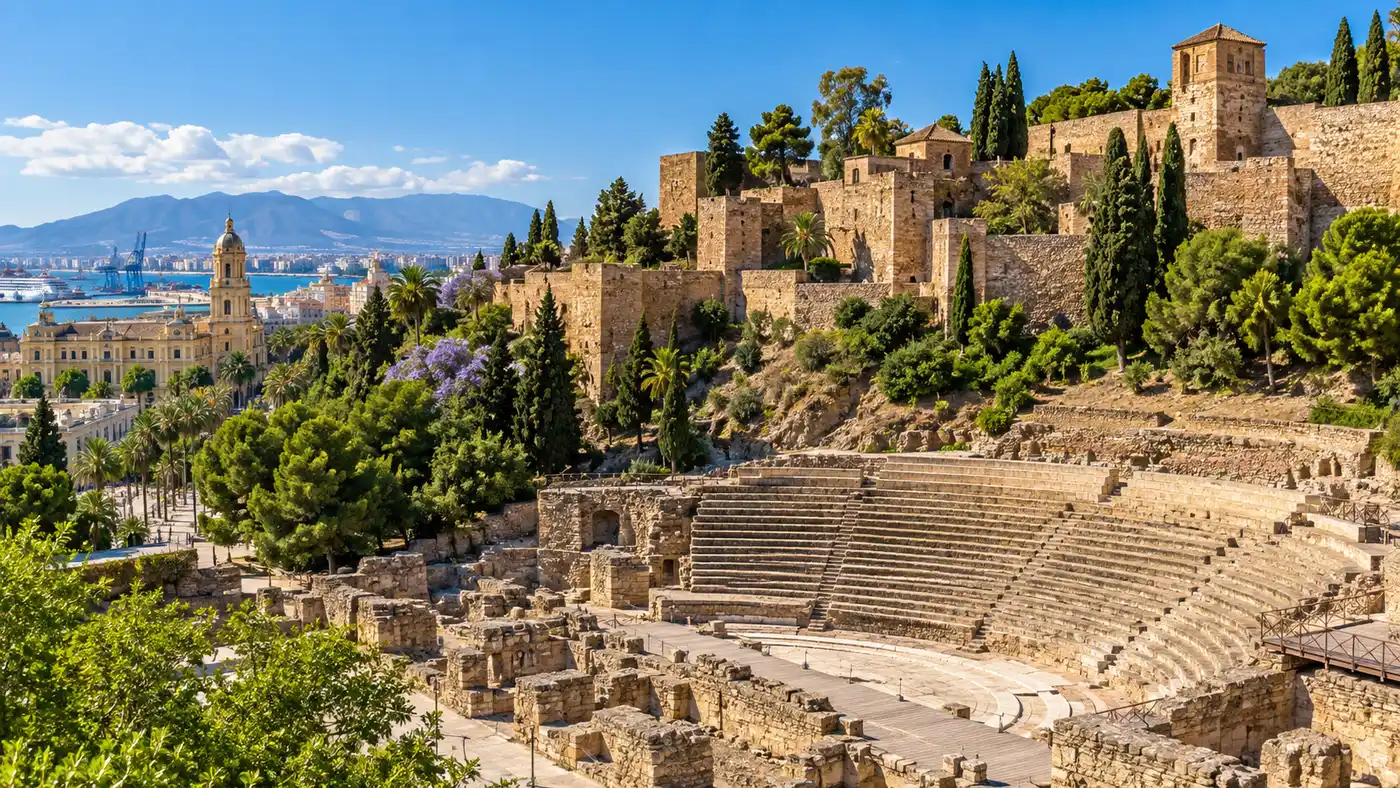
Explore the Roman Theatre and Alcazaba in Malaga. Complete guide to history, combined visits, ticket prices, practical …
Continue Reading →Common questions about alcazaba malaga.
The Alcazaba is a fortified palace complex built during the Muslim rule of southern Spain. It combined an active military base with defensive towers and residential quarters for city governors, functioning as an independent walled town on the slopes of Mount Gibralfaro.
No, filming did not happen here. Many travel blogs confuse this site with the Real Alcázar of Seville, which served as the Water Gardens of Dorne, or the Castle of Zafra. Málaga's fortress has a very similar Mudéjar and Moorish visual style, which causes the mix-up.
Most people spend between an hour and an hour and a half wandering the ramparts, gardens, and palace rooms. If you plan to hike the steep path up to Gibralfaro afterward, budget at least three hours in total.
The walled corridor connecting the two, known as the Coracha, is closed off internally for preservation reasons. You must exit the Alcazaba and walk along the scenic outdoor pine trail that runs alongside the outer walls to reach Gibralfaro.
If you have half a day and comfortable walking shoes, the combined €5.50 ticket is worth every cent. You get wide views over the port from the top castle and can split the visits across two days.
No lockers or left-luggage facilities exist inside the monument. You will need to use private luggage drop shops near Plaza de la Marina or Calle Cortina del Muelle before you start the climb.
There are vending machines near the palace restrooms and a drinking fountain by the Puerta del Cristo, but no sit-down café. Bring a water bottle, especially during warm summer afternoons.
Check opening hours, find the quietest courtyards, and make the most of your visit to Andalusia's finest coastal stronghold.