Castillo de Gibralfaro: Visiting Malaga's Hilltop Castle
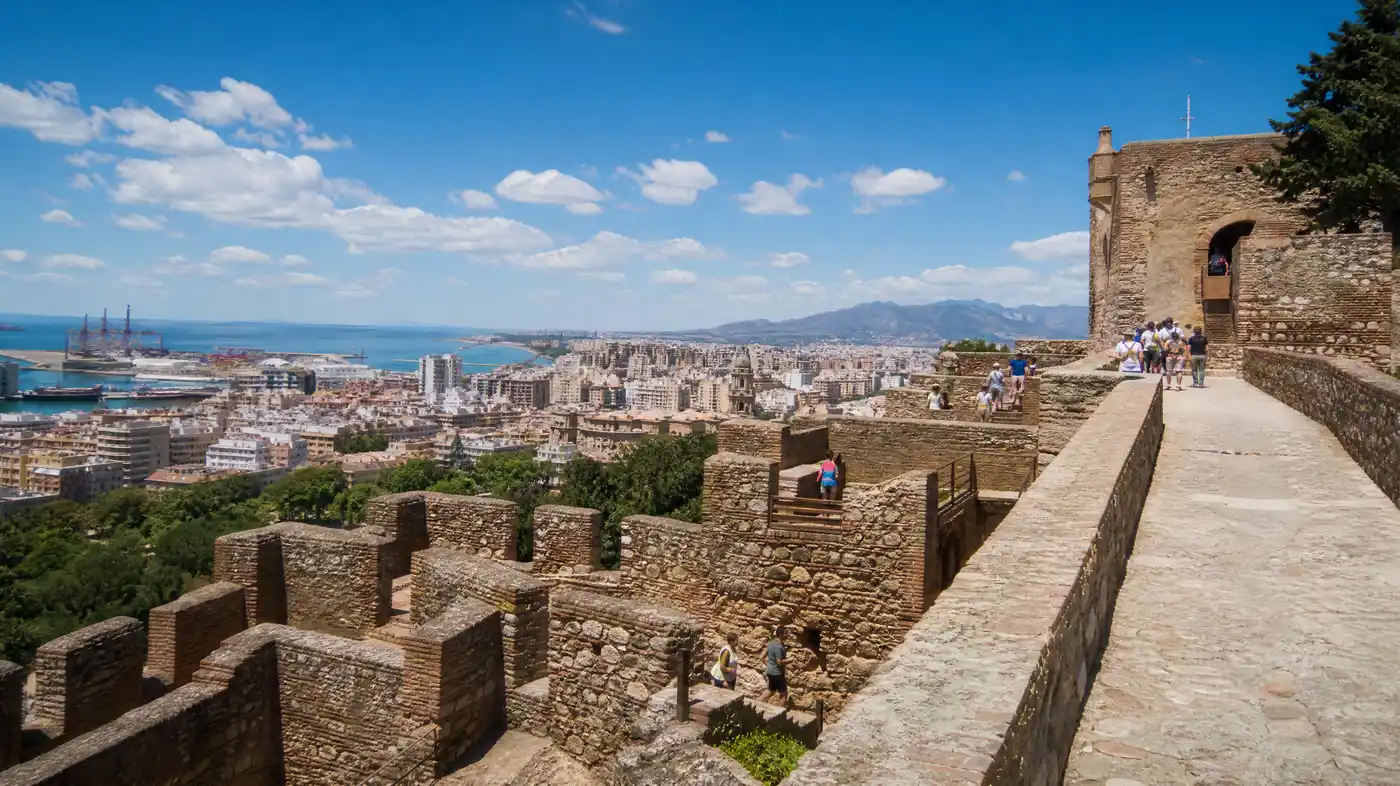
You can spot it from almost anywhere along the port: a crown of pale ramparts clinging to a steep limestone ridge high above the city rooftops. The castillo de gibralfaro is the dramatic backdrop to everyday life here, looming 130 meters above the Mediterranean waves. Most travelers come up for the panoramic view over the bullring and the bay, but the fortress itself carries a wild, gritty weight that you only feel once your boots are actually on the stone steps.
I still remember my first climb up the hill on a blazing October afternoon. The pines smelled like baked resin, cicadas were screaming from the dry brush, and my calf muscles burned with every winding turn of the cobblestone switchbacks. When I reached the battlements, the sea breeze hit me all at once. Whether you plan to hike the stone path or catch the local bus to the gate, this guide covers everything you need to know about visiting Malaga's famous hilltop fortress.
Book your alcazaba malaga experience:
History of the Castillo de Gibralfaro
Long before stone towers stood here, the Phoenicians used this crest as a natural lookout and built a primitive lighthouse on the ridge. That old beacon gave the hill its name, derived from the Arabic Jbel-Faro, meaning the mountain of the lighthouse. The fortress you see today was ordered into existence around 1340 by Yusuf I, the Nasrid Sultan of Granada. He wanted a dedicated military compound to protect the lower palace complex and house soldiers who could rain artillery on attackers below.
The castle earned its grim reputation during the summer of 1487. Catholic Monarchs Ferdinand and Isabella surrounded the city in one of the brutal final acts of the Reconquista. While the lower town fell relatively quickly, a small garrison of Moorish soldiers retreated into the castle of gibralfaro and refused to yield. For over three months, cut off from fresh supplies and water, they held out against relentless cannon fire and siege engines.
Starvation broke them in the end. After eating their horses, mules, and even boiled leather from their shields, the defenders surrendered in August. Ferdinand showed little mercy to the survivors, enslaving most of the surviving population. The fortress then served as a Christian military garrison for centuries. It stayed in active military hands until 1925, which explains why the layout feels like a working fortress rather than a delicate royal residence.
Exploring the Ramparts of Gibralfaro Castle Malaga
Unlike the landscaped courtyards and trickling fountains of the lower palatial fortress, this malaga castle is raw military architecture. It was built for defense, crossfire, and surveillance. When you step through the main gate, you will notice immediately how vast and open the grounds feel. Dense clusters of Aleppo pines, eucalyptus, and wild Mediterranean shrubs now fill the spaces where barracks and stables once stood.
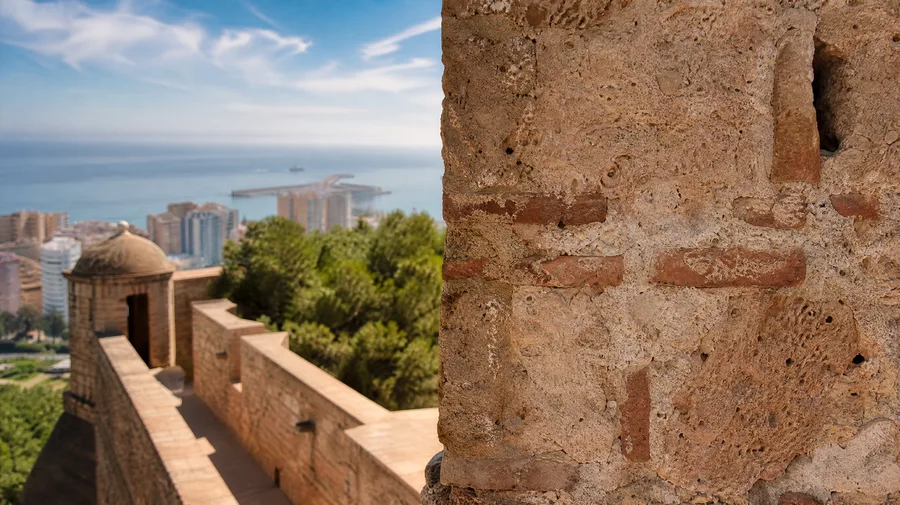
The main attraction is walking the perimeter ramparts. The stone walkway rises and dips along the outer curtain wall, linked by steep staircases that will test your knees. From the southern parapets, the drop down to the harbor is breathtakingly steep. You look directly down into the circular ring of the La Malagueta bullring, out across the cruise ship terminal, and over the grid of the city center toward the cathedral. On crisp winter mornings when the air is clean, you can see the shadowed outline of the Rif mountains across the water in Morocco.
Pro tip: Walk the northern wall early in your visit. Most tour groups rush straight to the sea-facing ramparts, leaving the northern towers empty, where you get an uninterrupted view of the inland Montes de Málaga mountain range.
Inside the castle grounds, do not skip the small military museum housed in the old gunpowder storehouse. It takes maybe 15 minutes to wander through, but the exhibits give solid context to what you are walking on. You will find 16th-century uniforms, rusty arquebuses, navigational maps, and an elaborate scale model showing how the entire defensive network functioned before modern city streets encroached on the slopes.
Tucked in the lower courtyard is the Pozo Airón, an engineering marvel carved directly into the bedrock. It plunges 40 meters down into the hill. Moorish engineers carved this deep shaft to ensure the garrison had fresh drinking water even during an extended blockade, though during the siege of 1487, the water level dropped so low it could no longer sustain the thirsty troops.
Getting to Castillo de Gibralfaro: Walking, Bus, or Taxi
Deciding how to reach gibralfaro malaga comes down to your fitness level, the time of day, and the season. The hill looks deceptively gentle from the waterfront, but the vertical ascent is roughly 130 meters over a relatively short distance. If you pick the wrong hour in July, that climb will feel like a punishment.
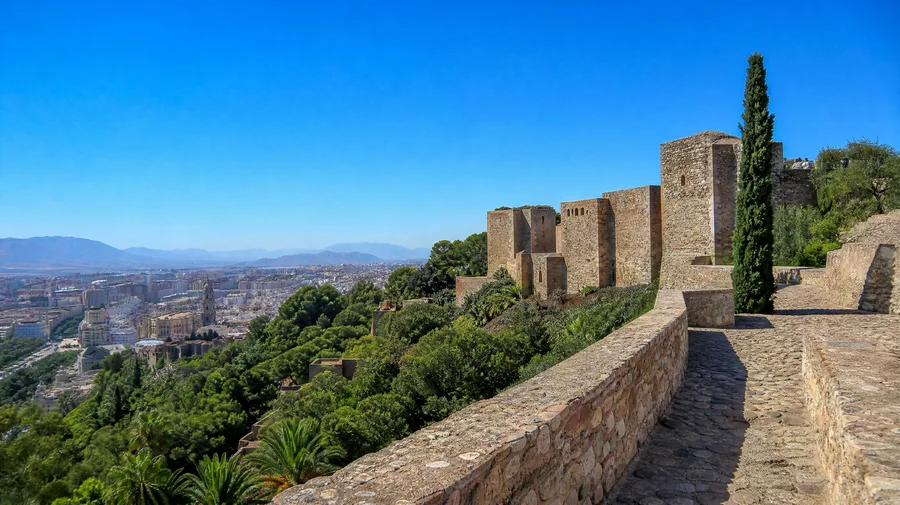
The most popular walking route starts right behind the lower palace walls along the Paseo Don Juan Temboury. It branches into a paved footpath known as the Coracha trail. This route winds up through pine woods with several stone lookout terraces where you can catch your breath and snap photos. The walk takes about 25 to 35 minutes at a steady pace. Wear decent shoes because the cobblestones have been polished slick by millions of passing sneakers over the years.
Note: The walking path has zero drinking water fountains along the switchbacks, and shade is patchy past midday. Always carry a water bottle before starting the hike from the town center.
If you prefer an easy journey, municipal bus line 35 runs directly from the Alameda Principal in the center right up to the castle parking lot. The ride takes roughly 15 minutes, costs €1.40 each way, and saves your legs entirely for the ramparts. Taxis are another simple option; they queue around the Plaza de la Marina and cost around €7 to €9 to take you straight to the fortress gate.
| Transport Method | Average Travel Time | Cost | Effort Level |
|---|---|---|---|
| Walking (Coracha Path) | 25 - 35 mins | Free | Moderate to strenuous climb |
| City Bus Line 35 | 15 - 20 mins | €1.40 single ticket | Very easy (leaves every 40 mins) |
| Local Taxi | 10 mins | €7 - €9 from center | Easiest (door to door) |
Book your alcazaba malaga experience:
The Link Between Malaga Alcazaba and Gibralfaro
People often confuse these two monuments or think they are the same complex. They are separate historical sites connected by a shared defensive past. Down below sits the palace-fortress, which you can read about in our guide to inside the Alcazaba Malaga. High above stands the military castle of gibralfaro. Between them runs a double-walled stone corridor called La Coracha.
In medieval times, soldiers could run back and forth inside this secure, fortified corridor without being exposed to enemy fire. Today, visitors often assume you can walk straight through this stone passage from one site into the other. You cannot. The internal passage is sealed off for preservation and safety reasons.
To visit both, you must exit one monument into the public park area, walk along the external path, and enter the other through its own separate ticket gate. Because of this layout, the order in which you visit matters:
- The downhill strategy: Take bus 35 up to gibralfaro castle first, explore the walls, walk down the paved footpath, and enter the lower fortress from street level. This saves your knees and calf muscles.
- The traditional climb: Tour the lower complex first, exit near the Roman Theater, and hike up the Coracha switchbacks to finish at the hilltop. This route is rewarding in the late afternoon when the sun sinks behind the hills.
If you have time for both, buying the combined entrance ticket at the ticket machine is the smartest move. It saves you money and cuts down on waiting in line twice. For detailed ticket rates and discount categories, check our breakdown of Alcazaba Malaga tickets and prices.
Visiting Castillo Gibralfaro: Practical Advice for Your Trip
A standard adult ticket to castillo gibralfaro costs €3.50 on its own, or €5.50 if you get the combined pass with the lower palace. Entry is free on Sundays after 14:00, but expect sizable crowds and long lines at the ticket scanners during those free afternoon hours. Gates open daily at 9:00, closing at 20:00 in the summer and 18:00 during the winter months.
There is a small café right outside the main gate with tables under canvas umbrellas. They sell cold sodas, bottled water, coffee, and light snacks. Prices are higher than down in the city, but sitting there with a cold beer after hiking up the hill feels worth every cent. Restrooms are available inside the castle grounds near the museum building.
To get the most out of your visit to this castle in malaga spain, keep these practical points in mind:
- Timing the light: Arrive roughly two hours before closing time. The golden light hits the harbor and cathedral at an angle that transforms the entire panorama.
- Footwear choices: Leave flip-flops at the hotel. The stone walkways along the battlements are uneven, with worn steps that can get slick even without rain.
- Sun protection: Once you are out on the ramparts, there is essentially no shade. Bring a wide-brim hat and sunscreen if you visit between May and September.
- Time needed: Plan for about 60 to 90 minutes inside the castle itself, not including the walk up or down.
The terrain inside the fortress is unfortunately difficult for travelers with limited mobility. Because of the historic masonry, steep stairs, and rough cobblestones, only a small portion of the main central courtyard is accessible for wheelchairs or strollers. If you use a wheelchair, taking a taxi to the nearby Mirador de Gibralfaro viewpoint just outside the walls is the best way to enjoy the incredible coastal views without dealing with the stone battlements.
Frequently Asked Questions about castillo de gibralfaro
Can you walk between Alcazaba and Gibralfaro inside the walls?
No, the historic fortified corridor connecting the two sites is closed to visitors. You have to exit one monument into the public park area and walk along the outside path to reach the other gate.
How long does the hike up to Gibralfaro take?
The walk up the paved Coracha path from the city center takes between 25 and 35 minutes. It is a continuous uphill climb, so take breaks at the scenic lookout points along the way.
Is Gibralfaro Castle free to enter on Sundays?
Yes, admission is completely free on Sunday afternoons starting at 14:00 until closing. Expect larger crowds during these hours, especially during peak travel months.
Is there parking available at the castle?
There is a small outdoor parking area near the entrance, but it fills up fast with tour vehicles and local cars. Taking bus 35 or a taxi from the center is much less stressful than hunting for a parking spot.
Quick Reference
- Entry fee: €3.50 regular, €5.50 combo with Alcazaba
- Opening hours: 9:00 to 20:00 summer, 9:00 to 18:00 winter
- Bus route: Line 35 from Alameda Principal
- Sunday entry: Free after 14:00
Book your alcazaba malaga experience:
My Take
A lot of people visit Malaga, wander the marina, eat grilled sardines on the beach, and look up at the hill without ever making the climb. That feels like a real missed opportunity. Walking along the crest of málaga gibralfaro gives you a physical sense of how this coastal city survived sieges, pirates, and empires over two thousand years. Pack a bottle of water, put on sturdy sneakers, and head up before sunset; the view alone will stay with you long after you leave Andalusia.
Read more about alcazaba malaga.